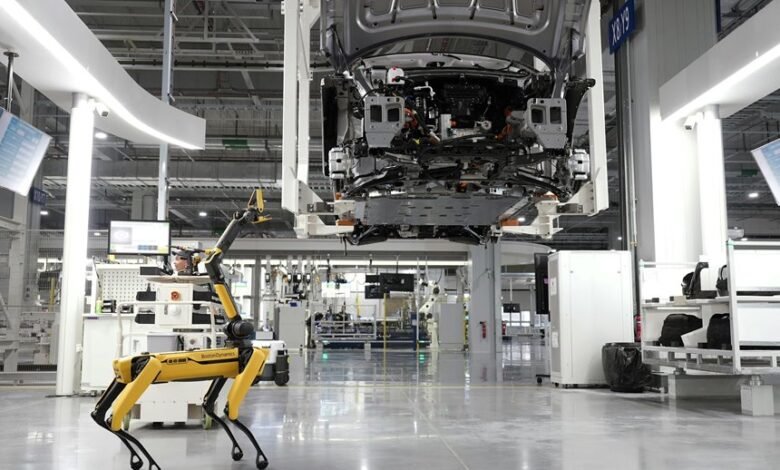
The Smart Automation System 55529472 demonstrates notable advancements in operational performance through its integration of sophisticated technologies. By focusing on automation analytics and throughput analysis, organizations can effectively measure improvements in efficiency and accuracy. This system’s capacity to reduce human error while enhancing productivity sets it apart in various industries. However, the implications of adopting such technology raise critical questions about its overall impact on traditional operational frameworks. What factors truly drive its success?
Key Features of Smart Automation System 55529472
The Smart Automation System 55529472 is characterized by its integration of advanced technologies designed to enhance operational efficiency and precision.
Its user interface facilitates seamless interaction, allowing users to easily navigate functionalities.
Furthermore, the system’s integration capabilities enable compatibility with various external devices and software, promoting a flexible and adaptive environment.
This combination empowers users to tailor operations according to specific needs and preferences.
Measuring Performance: Efficiency and Accuracy Metrics?
How can the performance of a Smart Automation System be effectively quantified?
Efficiency and accuracy metrics serve as essential performance benchmarks, providing insight into operational effectiveness.
Through automation analytics, organizations can assess system responsiveness, error rates, and throughput.
Real-World Applications: Success Stories and Case Studies
Numerous industries have successfully implemented Smart Automation Systems, demonstrating their transformative potential across various applications.
Case studies reveal significant improvements in operational efficiency and reduced error rates in industrial applications.
Customer testimonials highlight increased productivity and enhanced decision-making capabilities, underscoring the system’s role in driving innovation.
These success stories illustrate how Smart Automation Systems can redefine processes and elevate performance across diverse sectors.
Advantages Over Traditional Systems: Why Choose Automation?
While traditional systems often struggle with inefficiencies and human error, Smart Automation Systems offer distinct advantages that enhance operational performance and reliability.
These advanced systems provide significant cost savings through reduced labor expenses and minimized errors.
Furthermore, they drive enhanced productivity by streamlining processes and enabling faster decision-making.
As a result, organizations can achieve greater flexibility and responsiveness in today’s dynamic market environment.
Conclusion
In an age where human error is deemed the leading cause of workplace mishaps, the Smart Automation System 55529472 emerges as a beacon of hope, promising to eliminate such fallibility—if only to remind us that machines, too, can falter. As organizations tout enhanced efficiency and productivity, one must ponder: have we truly evolved, or merely traded one set of shortcomings for another? In this brave new world of automation, the question remains—who’s really in control?