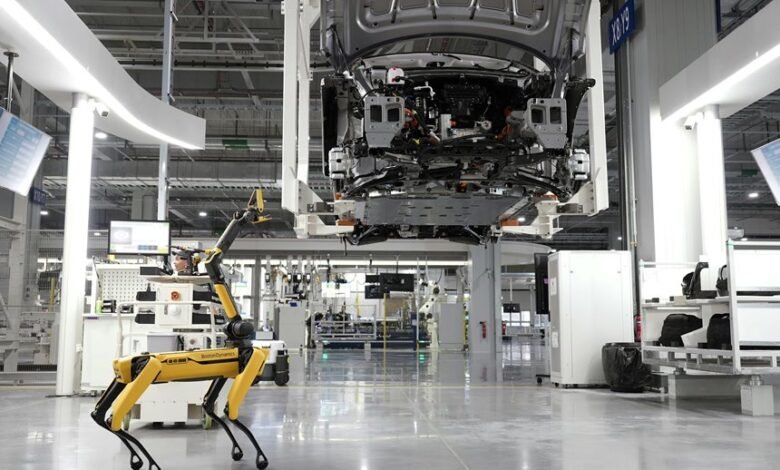
The Smart Automation System 2162281325 demonstrates notable capabilities in enhancing operational efficiency across diverse sectors. Its user interface facilitates streamlined processes, while advanced functionalities minimize errors and manual intervention. Performance metrics indicate significant improvements in productivity and decision-making. However, understanding the specific mechanisms behind these results and the implications for various applications remains essential. This analysis will uncover deeper insights into its transformative impact.
Key Features of Smart Automation System 2162281325
The key features of Smart Automation System 2162281325 encompass a range of advanced functionalities designed to optimize efficiency and enhance operational capabilities.
Central to this system is an intuitive user interface that facilitates seamless interaction, thereby significantly improving the user experience.
Moreover, its adaptability allows for customization, empowering users to tailor operations according to specific needs, ultimately promoting autonomy in automated processes.
How Smart Automation Enhances Operational Efficiency
Smart automation systems significantly enhance operational efficiency by streamlining processes and reducing the need for manual intervention.
Through effective process optimization, these systems minimize delays and errors, leading to increased productivity.
Furthermore, intelligent resource management allows organizations to allocate assets more effectively, reducing waste and maximizing output.
Consequently, businesses can achieve higher performance levels while maintaining the flexibility to adapt to changing demands.
Real-World Applications and Success Stories
Although many industries are still in the early stages of implementing smart automation systems, several organizations have already demonstrated significant improvements in performance through their successful adoption.
Notable success stories include advancements in home automation, where energy efficiency and convenience have surged, and in industrial robotics, which have optimized production workflows and reduced operational costs.
This showcases the transformative potential of these technologies across diverse sectors.
Measuring Performance: Metrics and Outcomes
When evaluating the effectiveness of smart automation systems, organizations must establish clear metrics and outcomes that reflect their operational goals.
Performance indicators, such as efficiency rates and error reduction, serve as essential benchmarks. Outcome assessments enable organizations to gauge overall impact, facilitating informed decision-making.
Conclusion
In conclusion, the Smart Automation System 2162281325 stands as the paragon of modern efficiency, transforming mundane tasks into a symphony of streamlined operations. One might ponder if this technological marvel will soon replace human oversight entirely, leaving mere mortals to ponder their existential purpose amidst automated perfection. Yet, as organizations bask in its metrics of success, it seems the only error to fear may be the existential crisis of the human workforce, overshadowed by their robotic counterparts.